Bedding · Sleep comfort
A Closer Look at Latex Toppers: Resilience, Breathability, and Fit
A mattress topper can change the welcome you get from bed without asking you to replace the mattress underneath. Latex brings a distinctive mix of buoyant cushioning and responsive support—but the right result depends on thickness, firmness, fit, and the condition of your existing sleep setup.
There is a particular kind of bedtime disappointment that starts with a mattress that is almost right. It may feel too firm at the shoulders, a little short on cushioning around the hips, or simply less inviting than it once did. Replacing the entire bed is a substantial decision. A topper offers a smaller, more targeted way to change the surface feel—provided the mattress beneath it is still doing its essential job.
Latex toppers are often considered by people who want extra cushioning without the slow, deeply sinking sensation some materials can create. Latex tends to respond quickly as the body shifts, giving the surface a springy, buoyant quality. Its construction may also allow more airflow than some dense, closely conforming foams. Those traits can make latex an appealing material, but they do not guarantee that every topper will feel comfortable or sleep cool for every person.
The useful question is not simply, “Is latex good?” It is, “What kind of latex layer, at what thickness and firmness, makes sense on this particular mattress?” A little attention to those details can help turn a bedding purchase from guesswork into a thoughtful adjustment.
What a latex topper actually changes
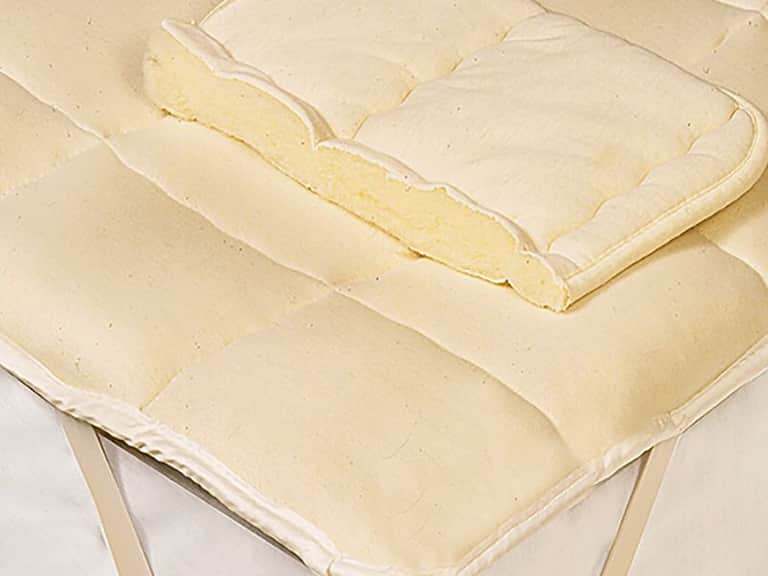
A topper sits between the mattress and the fitted sheet, adding a new comfort layer at the sleep surface. In the case of latex, that layer can soften the first impression of a firm bed while preserving more of the underlying mattress’s overall character than a much thicker or more deeply contouring layer might. It can also make the surface feel more responsive, with a gentle pushback as pressure changes.
That distinction matters. A topper is not a replacement mattress, and it does not rebuild worn springs, restore collapsed foam, or correct an unsupportive foundation. It changes the feel at the top; the mattress and base remain responsible for the structure beneath. If a bed sags noticeably, has a persistent dip, or leaves a sleeper uncomfortable because its support has broken down, adding a topper may cover the problem temporarily without solving it.
Think of the topper as a finishing layer rather than a repair kit. It may make a sound but overly firm mattress feel more welcoming. It may not make a tired mattress feel new again. Taking that distinction seriously is one of the most useful steps in choosing bedding, especially when the temptation is to hope that one new layer will fix every sleep complaint.
The springy side of latex
Resilience is one of latex’s defining qualities. When pressure is applied, the material compresses; when pressure eases, it tends to recover promptly. That quick response creates a buoyant sensation that many sleepers describe as lively or gently lifted rather than enveloping. People who change positions during the night may appreciate a surface that does not feel slow to respond when they turn.
The feel can be especially noticeable compared with materials that mould more closely around the body. Latex may cushion pressure points, but it often does so with a bit more pushback. For some, that makes movement across the bed feel easier. For others, particularly those who prefer a deeply cradled sensation, the same springiness may feel too firm or active. Comfort is personal; a material’s reputation cannot predict an individual sleeper’s experience.
Resilience also does not mean that latex is automatically supportive in every thickness or firmness. A very soft topper may compress more under heavier parts of the body, while a firm one may add only a modest cushion. The underlying mattress, body shape, sleeping position, and personal preference all influence how that layer behaves. The goal is not to seek a single ideal firmness, but to find a combination that feels comfortable while allowing the body to rest in a natural, relaxed position.
Breathability and the sleep climate
Temperature can turn an otherwise comfortable bed into a restless one. Latex’s open structure may encourage airflow through the material, which can be an advantage compared with some denser, less ventilated comfort layers. The result depends on the topper’s construction and the rest of the bed, however. Covers, sheets, mattress protectors, room temperature, humidity, and the mattress underneath all contribute to the sleep climate.
It is best to treat “breathable” as a helpful material characteristic, not a promise that a topper will keep every sleeper cool. A thick protective cover or several heavy bedding layers may limit the sensation of airflow. A warm room can overwhelm small differences between materials. Some people naturally sleep warmer than others, and shared beds can make temperature preferences a negotiation of their own.
For a practical bedroom setup, consider the whole stack. Check whether the mattress protector is designed to allow ventilation, choose sheets that feel comfortable for the season, and avoid piling on layers before deciding the topper itself is the source of warmth. If you live in or around Southampton, where damp, mild weather can shift across the year, it can be useful to notice how the room feels in different seasons rather than judging a new bedding layer after a single night.
Thickness: a small number with a big effect
Thickness influences how much the topper can change the sensation of the bed. A thinner layer generally offers a more modest adjustment, leaving more of the mattress’s original feel in place. A thicker layer can create a more noticeable change and provide additional cushioning, but it may also make the surface feel less like the mattress beneath it. More material is not automatically more comfortable.
Before choosing a thickness, identify the change you want. Is the bed just a little too firm? Are you hoping for a more substantial cushion? Do you want the mattress to feel more responsive, or are you trying to soften a particular pressure sensation? A clear description of the problem can help narrow the options. If the desired change is minor, a thick topper may overshoot. If a substantial change is needed, a thin layer may not do enough.
Thickness also affects practical details. Measure the bed’s total height, including any existing topper, and consider whether fitted sheets will still have enough depth. Check the topper’s dimensions against the mattress rather than relying on the label alone, particularly if the bed has an unusual size or a rounded edge. A layer that shifts, bunches, or does not cover the surface evenly can become a nightly irritation, however promising its material may be.
Firmness is a fit question, not a universal ranking
Firmness labels can be useful for comparing options within a range, but they are not a universal scale. One maker’s “medium” may feel different from another’s, and a topper’s apparent firmness can change when placed on a soft, firm, or worn mattress. Body weight and shape influence how deeply the material compresses; sleep position influences where pressure is most noticeable.
Side sleepers often pay particular attention to cushioning around the shoulder and hip, because those areas meet the mattress more directly. Back sleepers may focus on whether the surface feels balanced rather than excessively soft or rigid. Stomach sleepers may prefer less sink, although comfort varies from person to person. These are useful starting points, not rules that dictate what any individual should buy.
If possible, try a topper in person or look for a clearly stated return or exchange policy before purchasing. Ask how long a trial lasts, whether the topper must be returned in its original packaging, and whether cleaning or use affects eligibility. A few minutes spent understanding the terms can make it easier to evaluate comfort without feeling rushed into a decision.
Dunlop and Talalay: two common latex processes
Latex bedding is commonly made using Dunlop or Talalay processes. Both produce latex, but their manufacturing methods differ, and the resulting materials can have distinct characteristics. Broadly speaking, shoppers may encounter Dunlop described as denser or more substantial, while Talalay is often associated with a more uniform, buoyant feel. These are general descriptions rather than guarantees: formulation, firmness, and product construction all affect the finished sensation.
A product label that says “latex” does not tell the whole story. It is reasonable to ask whether the material is natural, synthetic, or a blend; which manufacturing process is used; how the cover is made; and whether the seller provides care instructions. “Natural” can refer to a material’s source, but it does not by itself explain the final feel, durability, or care requirements. Clear specifications are more informative than a broad descriptor alone.
People with latex sensitivities should consider their own medical advice and the manufacturer’s information before bringing latex bedding into the home. Product construction and covers vary, and a label should not be treated as medical guidance. If there is uncertainty about exposure or a history of reactions, consult a qualified healthcare professional rather than relying on general bedding descriptions.
Will a topper fit your mattress—and stay put?
Fit involves more than matching “queen” to “queen.” Measure the mattress’s length and width, then check the topper’s stated dimensions. If the mattress has an unusual depth, a pillow-top profile, or a flexible base, consider how the added layer may sit when the bed is in use. A topper that extends beyond the mattress or leaves a visible gap can affect both comfort and appearance.
Movement is another detail worth checking. Some toppers rely on friction and the fitted sheet to hold them in place, while others may have straps or a cover designed to improve stability. The way a layer behaves depends on its surface, the mattress fabric, and how often sleepers move. If a topper shifts, review the manufacturer’s guidance before adding a separate non-slip layer, since extra materials can change the feel or airflow.
Consider the complete bedding arrangement, too. A protector placed over a topper can help guard against spills and everyday wear, but its fit and fabric matter. A tightly stretched protector may compress the comfort layer; a loose one can wrinkle. Check that the fitted sheet accommodates the combined mattress and topper depth, and smooth the surface before bed so folds do not become pressure points.
When a topper is not the answer
A topper is most useful when the mattress is fundamentally sound and the desired change is at the surface. It is less likely to help when the bed has a clear sag, damaged coils, severe unevenness, or a base that is not providing stable support. Persistent discomfort can have many causes, and bedding is only one part of the picture. If pain is ongoing or worsening, consider seeking advice from a healthcare professional rather than assuming a different topper will resolve it.
It is also worth checking the foundation. A mattress on an unsuitable or uneven base may not perform as intended, and adding a topper cannot make that base supportive. Follow the mattress maker’s requirements for slat spacing, platform support, and adjustable frames. A stable foundation helps preserve the character of the mattress and gives any topper a more reliable surface to work with.
If the mattress is close to the end of its useful life, compare the cost of a topper with the possibility of replacing the bed. A topper may still offer temporary comfort, but it should not be expected to restore a mattress that has lost its structure. Being realistic can save frustration and help direct attention to the actual source of the problem.
A simple checklist before you choose
- Assess the mattress first. Look for sagging, lumps, uneven support, or signs that the foundation needs attention.
- Name the change you want. “A little softer” is more helpful than expecting a topper to transform every aspect of the bed.
- Compare firmness and thickness together. Either feature can alter the feel, and their effect depends on the mattress underneath.
- Measure carefully. Check the topper’s dimensions, mattress height, fitted-sheet depth, and any existing layers.
- Review materials and care. Find out what the latex is made from, what the cover contains, and how the product should be maintained.
- Read the trial terms. Understand returns, exchanges, shipping, and any conditions before opening or using the item.
- Think about the whole sleep environment. Covers, sheets, room conditions, and the bed base all influence comfort and temperature.
Care that protects the investment
Care instructions differ by product, so the manufacturer’s label should take priority over general advice. Many latex components should not be machine washed or exposed to harsh cleaning methods. A removable cover, when provided, may have separate instructions from the latex itself. Before spot-cleaning, check what the maker permits and allow any approved cleaning to dry fully before remaking the bed.
A suitable mattress protector can help shield the topper from ordinary spills and perspiration, but make sure it fits without compressing the layer excessively. Regularly check for shifting, damage, or trapped moisture, and follow the maker’s directions for rotating or airing the product if applicable. Careful handling is especially important when moving or storing a bulky latex layer; folding or bending it in an unsupported way may damage its structure.
Making the choice with confidence
A latex topper can be a thoughtful way to fine-tune a bed: responsive enough to feel lively, cushioning enough to soften the surface, and often constructed to permit airflow. Its appeal is not one-size-fits-all, though. The same bounce that feels refreshing to one sleeper may feel too pronounced to another, and the same thickness may be barely noticeable on one mattress but dramatically change another.
For Southampton residents and anyone refreshing a bedroom, the best approach is measured rather than impulsive. Start with the mattress and base you already have. Decide whether you want a subtle or substantial adjustment. Then compare thickness, firmness, dimensions, materials, care requirements, and trial terms. If practical, test the feel before committing, and give yourself time to notice how the bed performs across more than one night.
The most successful bedding choice is rarely the one with the boldest claim. It is the one that suits the sleeper, works with the mattress, and makes the bedroom feel more comfortable without asking a single layer to do everything. Latex may be a compelling part of that setup—especially when its resilience, breathability, and fit are considered as a complete package.